DRONE PILOT TRAINING
AESA-certified drone pilot courses
Get your AESA and EASA-recognized drone pilot license with us.
If you need to work with drones or fly in an urban environment, you need to have an official drone pilot license.
Without it, you will not be able to use certain drones, fly in cities, perform technical work, or offer professional services. It is not just a matter of complying with regulations. Obtaining your drone pilot certification will give you access to high-demand sectors such as civil engineering, industrial inspection, construction, energy, agriculture, and the audiovisual sector.
Being a professional drone pilot is a tool that multiplies your job opportunities. At Invicsa Airtech, we offer official drone training, which will allow you to fly legally, perform multiple aerial jobs, and work for companies that require certified pilots.
Discover all our courses and start flying!
Trained pilots
What is
for?
This course prepares you to pass the official AESA drone pilot exam for A1/A3 and STS 01 and 02, which is a prerequisite for flying drones weighi
You will have the support of our instructors, individualized follow-up, and assistance in the process of registering as a UAS operator with AESA.
We are with you
throughout the process
What are
STS-01 and STS-02?
- STS-01: VLOS (within visual line of sight) operations over a controlled land area in a populated environment.
- STS-02: BVLOS (beyond visual line of sight) operations with airspace observers over a controlled land area in a sparsely populated environment.
In addition, the course content covers the knowledge necessary to pass the AESA free online training and exam to obtain the Open Category A1/A3 pilot certificate.
Practical lessons calls
every month
in different cities
THEORETICAL CONTENT
What does the STS-01 and 02 drone course include?
Contents to pass the A1/A3 AESA exam.
Registration with AESA to take the exams.
Theoretical training for Specific Categories STS-01 and STS-02.
100% online theoretical training.
Theoretical meetings to reinforce and resolve doubts.
8 hours of practical drone flight training.
Practical exam.
Instructors with more than 2000 flight hours.
NEW! Basic training in flight planning. NEW! Joining the job pool forInvicsa Airtech operations.
PRICE
399€


Theoretical content of the drone pilot course
Within this course, you will find the theoretical content necessary to easily pass the AESA theoretical exam for standard scenarios STS-01 and STS-02. In addition to all the information we make available to you, we conduct online group tutorials to resolve doubts and focus on the most important aspects.
- Introduction to EASA and the aviation system; and
- Commission Implementing Regulation (EU) 2019/947 and Commission Delegated Regulation (EU) 2019/945:
- Applicability to Member States;
- Standard Scenarios (STS);
- UAS operator registration and operational declaration;
- UAS operator responsibilities;
- Responsabilidades de los pilotos a distancia; y
- Notification of events, incidents and accidents.
Knowing the applicable regulations is the basis of any industry. In the least tedious way possible, the most relevant aspects of the EU Regulation and its applicability to the national scope will be explained, defining the training levels, the standard scenarios (STS) and the figures of operator, pilot and observer, as well as the responsibilities of each one of them. The categories of operations and classes of unmanned aircraft systems (UAS) will also be specified.
- The influence of psychoactive substances and alcohol, as well as when the remote pilot is not in adequate condition due to injury, fatigue, medication, illness or other causes;
- Effect of weather conditions on the crew; and
- Human perception:
- Factors influencing the pilot’s visual range (“VLOS”);
- Evaluation of obstacle clearance and distance between unmanned aircraft and obstacles
- Evaluation of unmanned aircraft flight speed
- Evaluation of unmanned aircraft flight altitude.
- Situational awareness
- Night operations; and
- Communication between different people involved in the operation.
A basic aspect of UAS operations is the pilot. Consequently, it is also essential to know the factors that can affect its performance and therefore the performance of the operation. The main causes that reduce human performance such as fatigue, illness and the ingestion of medication, alcohol or other psychoactive substances will be discussed and examples of the limitations of human perception and how weather conditions can affect pilots will be discussed.
- Pre-flight procedures
- Operation evaluation;
- Identification of a controlled ground area suitable for unmanned aircraft operations and in accordance with standard scenarios;
- Environmental conditions and methods for obtaining weather forecasts;
- Limitations and conditions applicable to the ground risk prevention zone according to the operations manual;
- Flight planning;
- Verification of UAS conditions and use of checklists.
- In-flight procedures
- Standard procedures; and
- Contingency and emergency procedures;
- Post-flight procedures
- UAS inspection and maintenance;
- Reports and details on operation and registration.
UAS operations extend beyond the flight itself. Not only the in-flight procedures but also the pre-flight and post-flight procedures must be known. Pre-operation planning is key to its effectiveness and safety. In the preparation of the operation, the flight area must be analyzed and the possible associated risks must be foreseen, as well as the weather conditions and the equipment to be used. During the flight, not only the normal flight procedures must be taken into account, but especially the procedures in case of any anomaly or emergency, situations for which the pilot must be prepared. In addition, the actions to be taken once the flight is over will be explained, including the recording of the operation information and the inspection and maintenance of the systems.
- Definition of the operational volume, reinforced by height and speed limitation systems;
- Consultation of airspace limitations through official sources; procedures for updating and uploading airspace limitations to the geo-awareness function;
- Evaluation of flight geography:
- Procedures required for UAS operations in controlled airspace, including a protocol for communicating with air traffic control and obtaining coordination and instructions, if necessary;
- Coordination with airfield managers for UAS operations, if necessary;
- Selection and evaluation of airspace information that may have an impact on the planned operation;
- Airspace monitoring and remote pilot coordination with airspace observers:
- Proper placement of airspace observers;
- Solid and effective means of communication;
- Phraseology;
- Definition of basic actions to be taken in cases of emergency, including problems with the UAS or the occurrence of a mid-air collision hazard during an operation.
- Specification of an effective emergency response plan appropriate to the operational scenario;
- See-and-avoid procedures.
In order to offer a safe operation, the first thing to know is the risks. Based on the risks of the operation, the necessary measures to eliminate or at least reduce them should be analyzed. To reduce risks in the air, i.e. a collision with another aircraft, it is important to define the volume of the operation and respect it, to avoid invading the airspace of other users or being limited for any reason. For this purpose, there are several procedures that will be explained in this chapter, which are applied in the planning of the operation as well as in its development.
- Advanced flight principles;
- Environmental limitations of UAS;
- Flight assistance systems and possible failures
- GNSS;
- Inertial sensors;
- Compass.
- Command and control principles:
- General knowledge;
- Link frequencies and spectrum;
- Flight modes;
- Safety systems.
- Requirements applicable to unmanned aircraft carrying class C5 and C6 markings;
- Familiarization with the user manual provided by the UAS manufacturer.
Another basic aspect in UAS operation is, precisely, to know the UAS and its main components. This chapter will develop the operating principles of unmanned aircraft and their systems, such as positioning and navigation systems, link and control systems and basic safety systems. The importance of knowing and understanding the instruction manual of each aircraft to be used will also be emphasized.
- The effect of weather conditions on the flight of an unmanned aircraft:
- Wind (e.g. turbulence, effects in urban environments, etc.);
- Temperature;
- Visibility; and
- Air density;
- Obtaining weather forecasts;
Weather is a very important conditioning factor in the development of a UAS operation. They can significantly affect the performance of both the aircraft and the pilot. It is therefore necessary to know the basics of meteorology applicable to air operations, its impact and how to obtain forecasts, to be taken into account in planning.
- Typical operating envelope of a gyroplane, a fixed-wing aircraft and a hybrid configuration aircraft;
- Center of gravity (CG) and mass balance:
- Consider overall stability when installing gimbals and payload;
- Understand the different payload characteristics and how they affect the stability of the unmanned aircraft in flight; and
- Understand that different types of UAS have different CG;
- Securing the payload;
- Batteries;
- Understand the operation of the power supply to help prevent possible unsafe conditions;
- Familiarization with the different types of existing batteries;
- Understand the terminology used for batteries (e.g. voltage, capacity, charge and discharge, C-rate, etc.); and
- Understand battery operation (e.g., charging and discharging, installation, use, storage, hazards, etc.).
In relation to the knowledge of the UAS, the principles of flight and mass balance must be emphasized in order to obtain the necessary stability. These somewhat specific aeronautical concepts will be explained in a way that is accessible to the general public. Battery performance characteristics, a fundamental component in UAS, will also be discussed.
- Low speed mode function;
- Evaluation of the distance to non-participants in the operation;
- Rule 1:1.

Starting January 1, 2026, European drone regulations will change, and many UAS pilots are facing a new limitation: they will no longer be able to fly in standard scenarios unless they have a drone with C5 class marking.
What is
for?
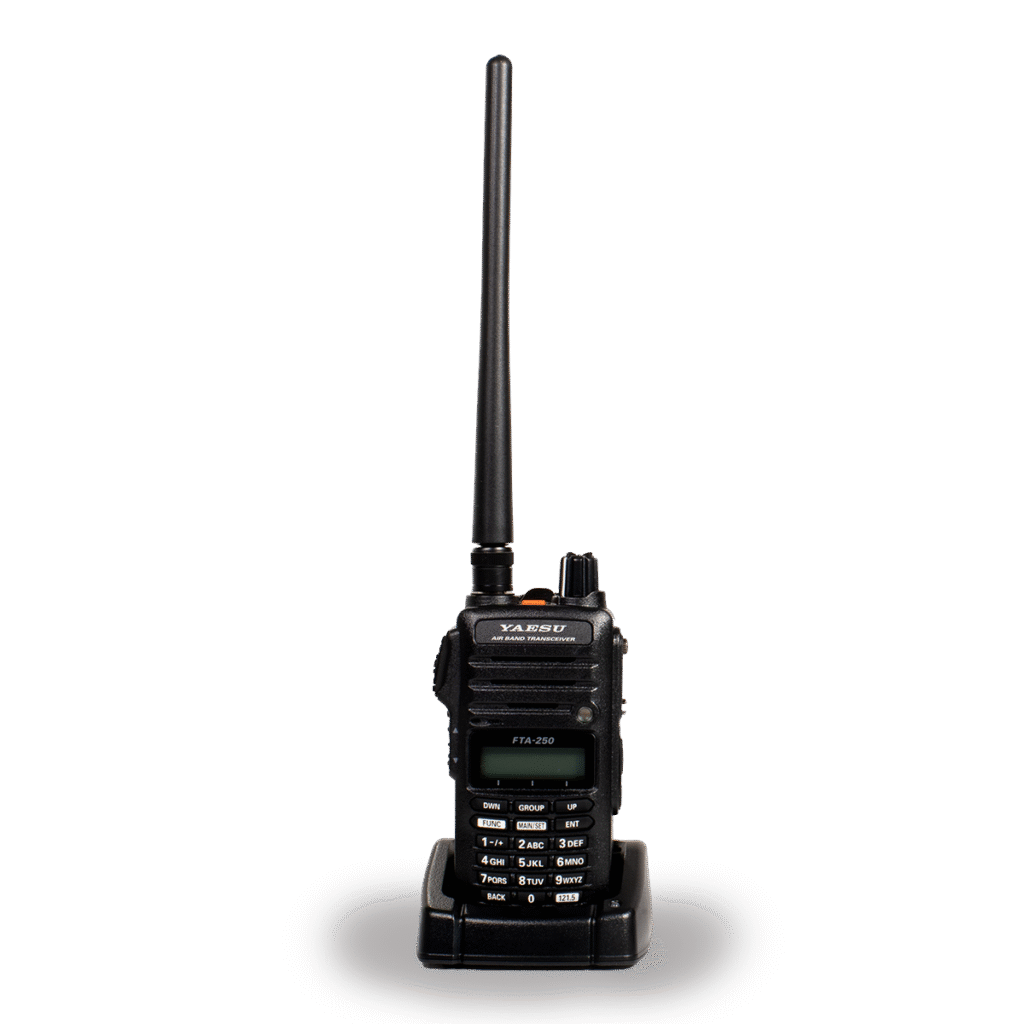
With the official Radio Operator certificate you will obtain the necessary skills and knowledge to communicate with the control tower of an airport and will be able to fly in controlled airspace.
This is a mandatory certification for all drone pilots wishing to perform operations within the CTR (Controlled Traffic Region) of an airport.
100% online training
In your own time. From anywhere.
What does it include?
Acceso a una plataforma online con amplio contenido. Tutoriales teóricos para reforzar y resolver dudas.
Formación práctica por videoconferencia de 5 horas.
Pilotos instructores de aviación comercial con amplia experiencia en
comunicaciones.
Instructores con más de 3000 horas de vuelo RPA.
NEW! Addition to the job pool for Invicsa Airtech operations.


What does the official radio operator course
include?
Theoretical content of the Drone Radiophonist course
Within our course you will find the theoretical contents necessary to perform safe operations in airport environments. In addition, practical cases of real drone operations will be presented within the controlled environment of an airport.
Airspace classification and air traffic services
Principles of radiotelephony and communications
Radiotelephony and communications
Radio procedures
Emergency procedures
Definitions and abbreviations
Radiotelephone communications
Radiotelephone transmission techniques
Airfield traffic
- Review of the theoretical knowledge acquired through the platform.
- Case studies with RPAs within controlled airspace and radio range
- Theoretical and practical examination
What is
for?
This course grants you the official title of Phytosanitary Product Applicator with drones in accordance with Royal Decree 1311/2012 and current regulations.
It allows for legal and safe aerial phytosanitary applications, reducing health risks for farmers and increasing the speed, efficiency, and precision of phytosanitary applications.
This is a mandatory certification for professional practice in aerial agricultural application.
Simulation of real jobs
With flight practices for applying phytosanitary products
What does it include?
90 hours of classroom training.
Theoretical tutorials to answer questions.
Access to an online platform with all the theoretical content.
6 hours of field practice with professional phytosanitary application drones using DJI T30.
I work with different real-life scenarios (irregular plots, obstacles, wind, slopes, etc.).
Complete configuration of the drone for treatments: flow rate, height, speed, and pass width according to the crop.
NEW! Addition to the job pool for phytosanitary operations at Invicsa Airtech.
Theoretical content of the phytosanitary application pilot course
At Invicsa Airtech, we don't just train phytosanitary applicators. From the outset, we prepare drone pilots who specialize in aerial agricultural operations.
- General information on plant protection.
- Plant protection products: classification and characteristics of the different groups.
- Formulations of plant protection products: nature and characteristics.
- Aerial application equipment and methods (I): Fixed installations in different types of aircraft. Equipment for different application techniques.
- Aerial application equipment and resources (II): Operation, regulation, maintenance, and calibration of equipment. Characterization of the aircraft.
- Small and medium volume aerial application techniques: ULV, spraying, dusting, and spreading.
- Large-volume and compact aerial application techniques.
- Meteorology applied to plant protection. Biometeorology.
- Planning agroforestry treatments: preliminary assessment, obstacles to low-altitude flight, and flight plan.
- Agroforestry tracks and helipads: characteristics and conditions, facilities, equipment, auxiliary means for supplies and disposal of empty containers.
- Risks to the environment arising from the use of plant protection products: danger to wildlife and livestock, phytotoxicity, and soil and water contamination. Methods for identifying illegal plant protection products and risks associated with their use.
- Pollution control. Special anti-drift techniques.
- Risks to human health arising from the use of plant protection products: toxicology, poisoning, and first aid. Classification and labeling. Pictograms, warning words, risk phrases or hazard statements, safety advice, symptoms of poisoning, and recommendations for users. Health surveillance structures and availability of access to report any incident or suspected incident.
- Residues of plant protection products: residue dissipation, safety periods, and MRLs in plant products and drinking water.
- Safety and hygiene. Occupational health.
- Legal regulations.
- Review of theoretical knowledge acquired
- Practical exercises in phytosanitary application
- Theoretical and practical examination
CURSOS ESPECIALIZADOS EN DRONES
Specialised drone courses for different professional profiles
Do you need to fly drones for a specific activity?
At Invicsa Airtech we offer specialised drone courses adapted to the different job opportunities in the sector.
Thanks to technical training certified by AESA, our programmes prepare you to operate drones safely and in accordance with current European regulations.
Transform
knowledge into
opportunity
Courses in audiovisual production with drones
Learn how to make professional aerial recordings for film, television, or events.
Technical inspection courses with drones
Master the use of drones for inspecting infrastructure, power lines, or solar farms.
Drone course for emergencies and civil protection
Training for search operations with drones, surveillance, or fire control with UAS.
Course on surveying and mapping with drones
Learn how to generate high-precision digital terrain models and orthophotos using drones.
FPV drone course
For those looking to master manual drone flight, drone acrobatics, immersive cinematography, or compete in high-speed races with precision and safety.
Drone assembly courses
Learn how to build your own drone piece by piece. Includes hands-on experience in a drone manufacturing workshop.
Professional drone applications course
Analyze and discover the different sectors where drones have been making a name for themselves in recent years. Among other things, you will learn how to use drones in surveying, audiovisual, and phytosanitary services.
ADVANTAGES OF TRAINING AT INVICSA AIRTECH
Detección y evitación automática de obstáculos
Adaptation in real time to changes in the environment
fleet management platforms
Detección y evitación automática de obstáculos
Adaptation in real time to changes in the environment
fleet management platforms
We have already trained pilots in these places.
Shall we complete the map together?
Collaborating entities

What they say about us


Totalmente recomendables tanto para formarte como para encargarles cualquier proyecto.


Gracias por vuestra dedicación, por la paciencia con la que enseñáis, por la generosidad al compartir vuestro conocimiento y por la alegría que transmitís en cada clase.
De verdad, ha sido un aprendizaje enriquecedor no solo a nivel técnico, sino también personal. 🌟


Daniel Naredo.


Muchas gracias.

Un curso muy bien aprovechado.
FREQUENTLY ASKED QUESTIONS
What requirements do I need to take a drone pilot course in Spain?
To take a certified drone pilot course in Spain, you normally need to be over 14 years old. In addition, if you want to be a drone operator, you must be at least 16 years old. Depending on the level of the course (Level 0 – Level 4), you may be asked to meet additional requirements, such as a radio operator certificate for drones or other specific AESA training.
Do you need to have knowledge of aeronautics to successfully complete drone pilot courses?
At Invicsa Airtech, classes are taught from a beginner level, so you don’t need any prior knowledge of aeronautics to successfully complete the drone pilot courses.
What topics are taught in a drone pilot course?
Although it depends on the type of course in question, AESA regulations specify the topics that must be covered in order to pass the different courses. Broadly speaking, the knowledge required is divided into flight safety, meteorology, flight plans, risk management, and flight practices, among others.
In addition, Invicsa Airtech addresses technological and operational issues for specific sectors related to cameras and flights in different scenarios (urban, technical inspections, aerial photography, aerial surveying, etc.).